
In Conversation with Shinichiro Ogata
When Alejandra Albarrán, founder of The Orb, first spoke with Shinichiro Ogata, what stayed with her was not a particular object, interior, or project. It was a way of seeing the world.
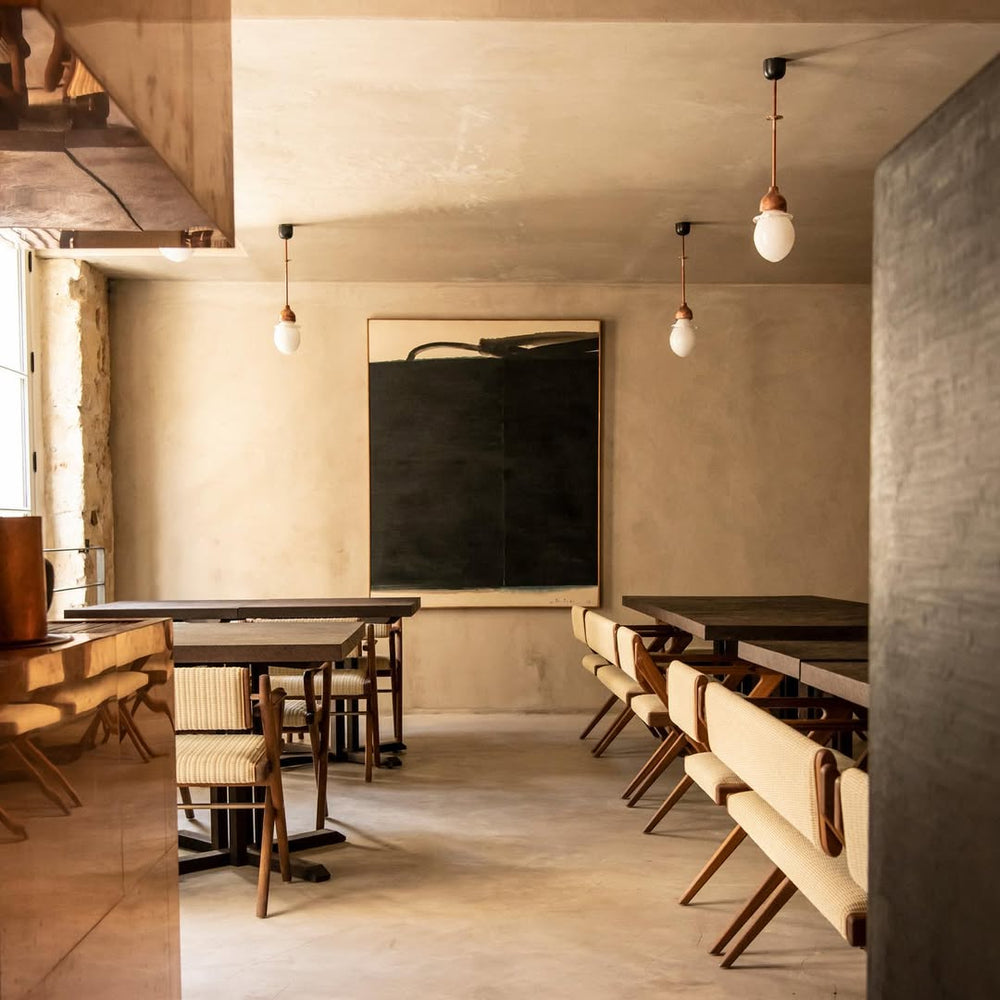
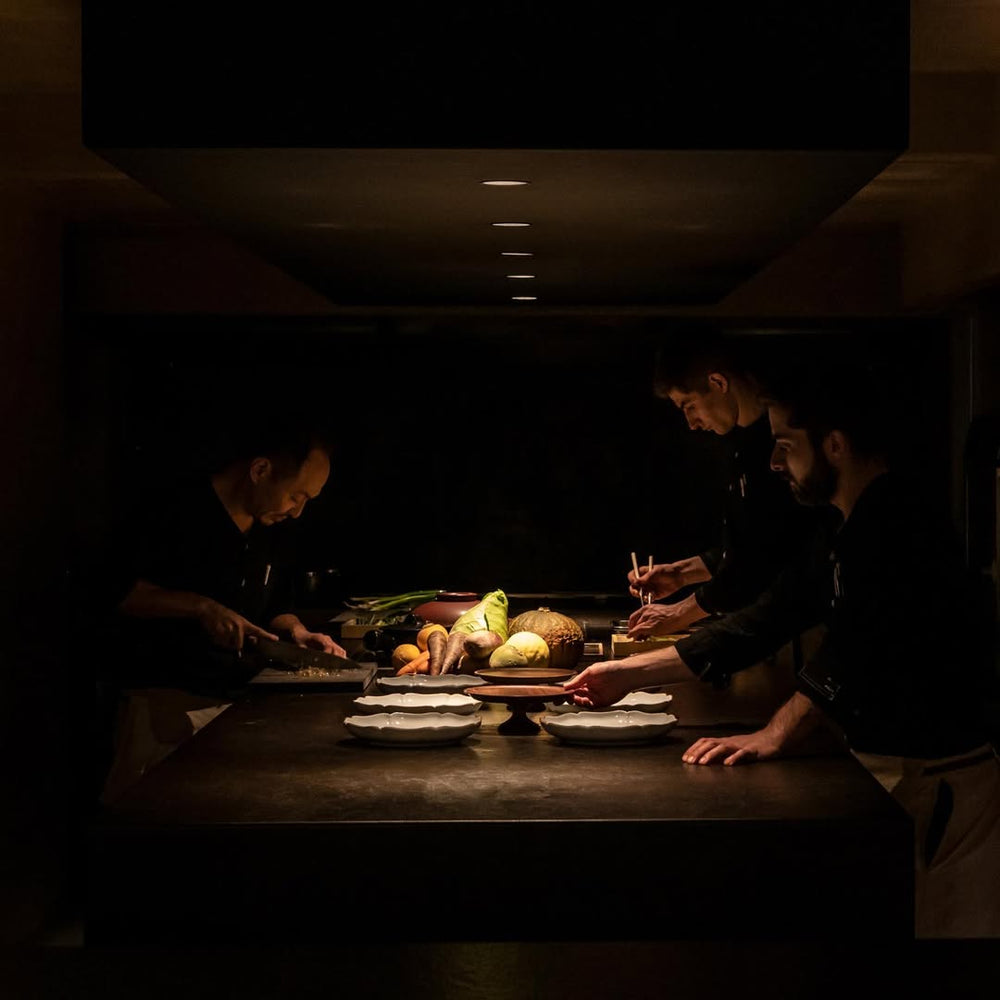
Over the years, Ogata-san has built something increasingly rare: a cultural universe where design, craftsmanship, hospitality, food, architecture, and ritual exist as part of a single experience. Through OGATA, he has created spaces that invite a slower, more attentive way of engaging with everyday life—one rooted in care, material knowledge, and a profound respect for tradition.
Their conversation revealed an unexpected connection. Born and raised in Nagasaki, Ogata-san comes from a city that holds a unique place in Japanese history. For centuries, it served as one of Japan’s most important gateways to the outside world, including Portugal, whose influence can still be found in the city's architecture, cuisine, and cultural memory today.
Ahead of OGATA's arrival in Lisbon, Alejandra Albarrán, founder of The Orb, spoke with Shinichiro Ogata about nature, craftsmanship, impermanence, and the responsibility of carrying culture forward through design.


You were born in Japan, a place where tradition and craft are deeply intertwined. What do you remember most vividly from your childhood that still influences your design philosophy today?
I was raised in an environment rich in nature, surrounded by mountains, the sea, and rivers.
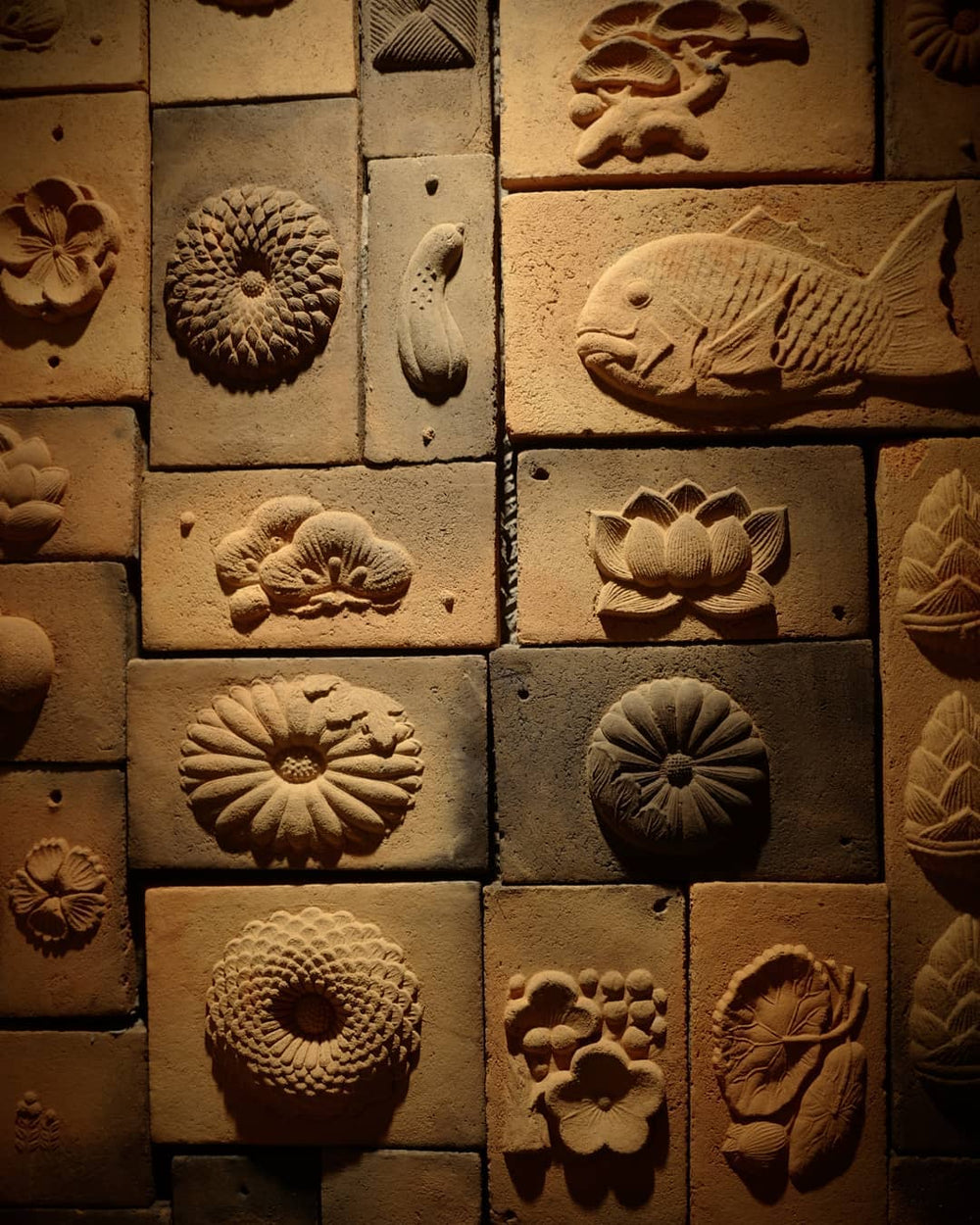
Born and raised in Nagasaki—a place that has long served as a gateway for Western culture, as seen in its historical ties with Portugal—I grew up within a layered cultural landscape. Although I was not consciously aware of it in my early years, living in a place shaped by the continuous encounter of different cultures naturally cultivated an openness toward perspectives beyond Japan, and a quiet sensibility to receive, reinterpret, and carry them forward in my own way.
Who or what first inspired you to design?
There was no single individual in particular, but I was deeply influenced by the innovative cultural movements that emerged in New York during the 1990s. The city’s energy, shaped by its urban density and constant experimentation, offered a sensibility that felt both raw and refined, leaving a lasting impression on how I perceive contemporary culture.
Your work seems to erase the boundary between object, space, and ritual. How do you approach creating harmony between these worlds?
I always position myself as the one who experiences, connecting everything through a human, lived sensibility. What I create emerges from what I perceive through my own five senses, grounded in direct experience rather than abstraction.
You often speak about the balance between the visible and the invisible. How do you approach that balance when designing a space or an object?
I believe that by allowing for what is seemingly nothing, what truly exists becomes visible. Absence is not a lack, but a necessary condition for presence to emerge—an understanding rooted in the concept of zero. Meaning quietly reveals itself through 空 (Kū), 間 (Ma), and 無 (Mu).


How does the concept of impermanence — mujo — shape the way you see beauty?
Impermanence is the nature of constant change. No moment is ever the same; everything continuously shifts and aligns in its own time. This, to me, is the aesthetic inherent in nature. Just as there are clear days and rainy days, there are moments when things flow smoothly and moments when they do not. To understand impermanence is to recognize that change is not an exception, but the natural state of things—and to learn to accept, embrace, and find beauty in that change.
“The intention is to connect people and cultivate a shared sense of well-being.”— Shinichiro Ogata
Bringing Ogata to the world is not just about opening new spaces, but about sharing a way of life. What does that mean to you?
At its core, the intention is to connect people and cultivate a shared sense of well-being. When human beings are truly connected, emotional richness follows. OGATA is grounded in a culture born in Japan that emphasises coexistence with nature. I believe this way of thinking is not optional, but essential in the context of today’s global environmental realities. Beyond distinctions of East and West, religion, or ideology, this principle is fundamental to the future of humanity.
Where do you begin — with a material, a sound, a feeling?
Everything begins with a personal sense of desire. I take my cues from nature—nature itself is my teacher of design.
Is there a material you return to again and again? Why?
Wood. Because it is a living material—precisely because it is alive, even when it is cut, it grows again. It exists within the natural cycle of circulation and regeneration. Returning to materials that renew and circulate is a return to nature itself. In Japanese wooden architecture, this philosophy of coexistence is deeply embedded. Trees are cultivated over two hundred years and passed down across generations, sustaining techniques that have continued for more than a thousand years.
What have you learned from working so closely with artisans?
I hold deep respect for the act of mastering a single craft. At the same time, my own position is different. Rather than pursuing mastery of a single technique myself, I see my role as a designer as reinterpreting traditional techniques within a contemporary context, allowing them to be renewed and carried forward through transmission and succession.

We deeply admire the Japanese concept of ikigai — finding purpose through dedication to one’s craft. Do you feel that your life’s work embodies your ikigai?
Of course, I feel that deeply. My work is my sense of purpose. As one individual, being engaged in the act of carrying a culture forward—connecting it to future generations—is my ikigai.
Are there moments when you struggle with your own perfectionism?
There is always a tension between creation and management, between the right brain and the left, and in trying to hold both at once. I do not see myself as an artist. Rather, I work within commerce, with the intention of carrying creation forward into the future. There is a constant conflict in making something that can sustain itself economically while maintaining a high level of creative integrity. What is merely sellable, efficient, or mass-produced cannot necessarily be called high quality. For me, the challenge lies in pursuing both creation and business—ensuring that creativity remains precise and uncompromised, while existing within a structure that can endure.
“Nature itself is my teacher of design.”— Shinichiro Ogata


Is there a message you hope your work will continue to carry after you?
OGATA’s purpose is to create a virtuous cycle in which natural resources and the environment are protected, while people are able to live rich, meaningful lives. Rooted in a culture born in Japan that values living in harmony with nature, OGATA seeks to extend this sensibility beyond borders. In the face of today’s global environmental challenges, I believe this is the most urgent priority. Beyond distinctions of East and West, culture or religion, it is essential for humanity - that people and nature coexist and thrive together, allowing all of us to live with true depth and fulfillment.
