
A Guide to Café Interiors
Coffee may remain the ritual, but architecture, materiality and hospitality have transformed the café into one of the most thoughtfully designed spaces of contemporary culture.
Coffee may be the reason we arrive, but increasingly it is only part of the experience.
Some of the most interesting cafés today are shaped as complete worlds, where architecture, materials, light and ritual are considered with the same care as what ends up in the cup. They are places designed not simply for consumption, but for lingering.
For this editorial, we selected cafés that embody this approach. Spaces where hospitality takes many forms, and where even the smallest details contribute to a distinct sense of place.


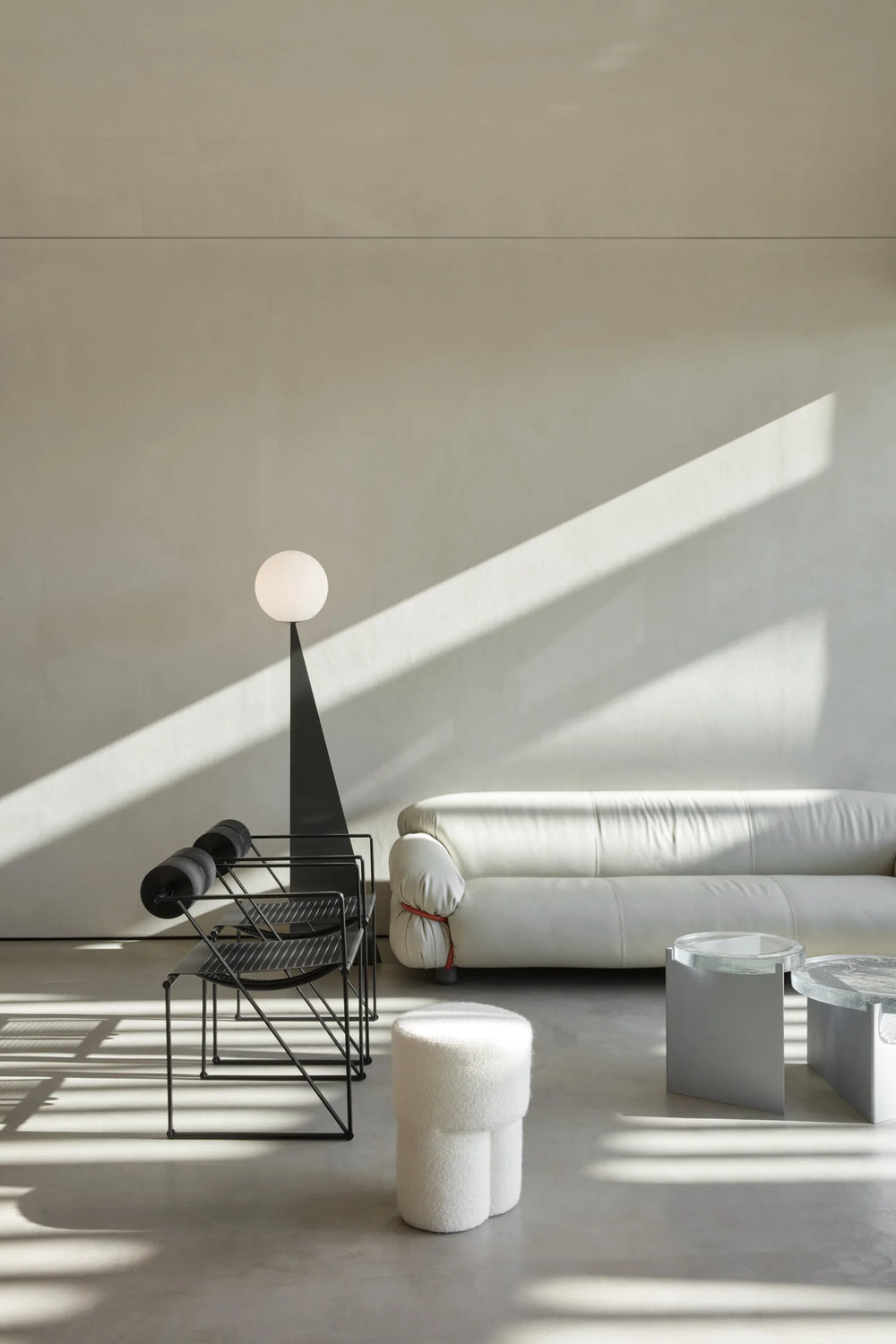
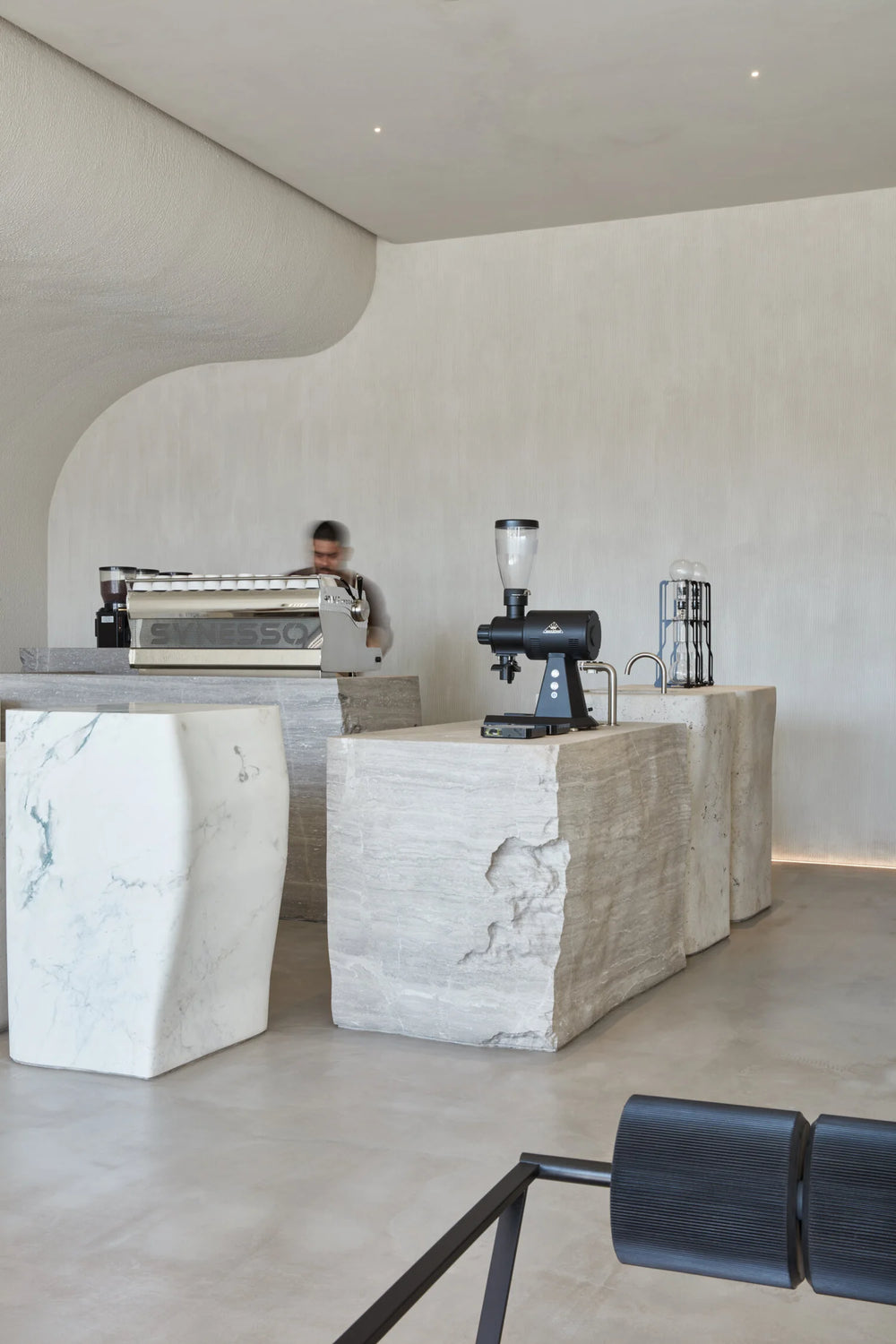
For Orijins, VSHD Design looked beyond the conventions of café interiors and turned to the natural world for inspiration. The project draws from the weathered stones found along the shores of the Red Sea, translating their imperfect forms and softened surfaces into architecture.
The interior is defined by a sculptural ceiling that gently curves across the space and a series of monolithic marble blocks that form the coffee bar. Together, these elements create a landscape rather than a traditional café setting. Plaster walls, polished concrete floors and a restrained palette of stone, sand and shell tones reinforce the sense of quiet simplicity.
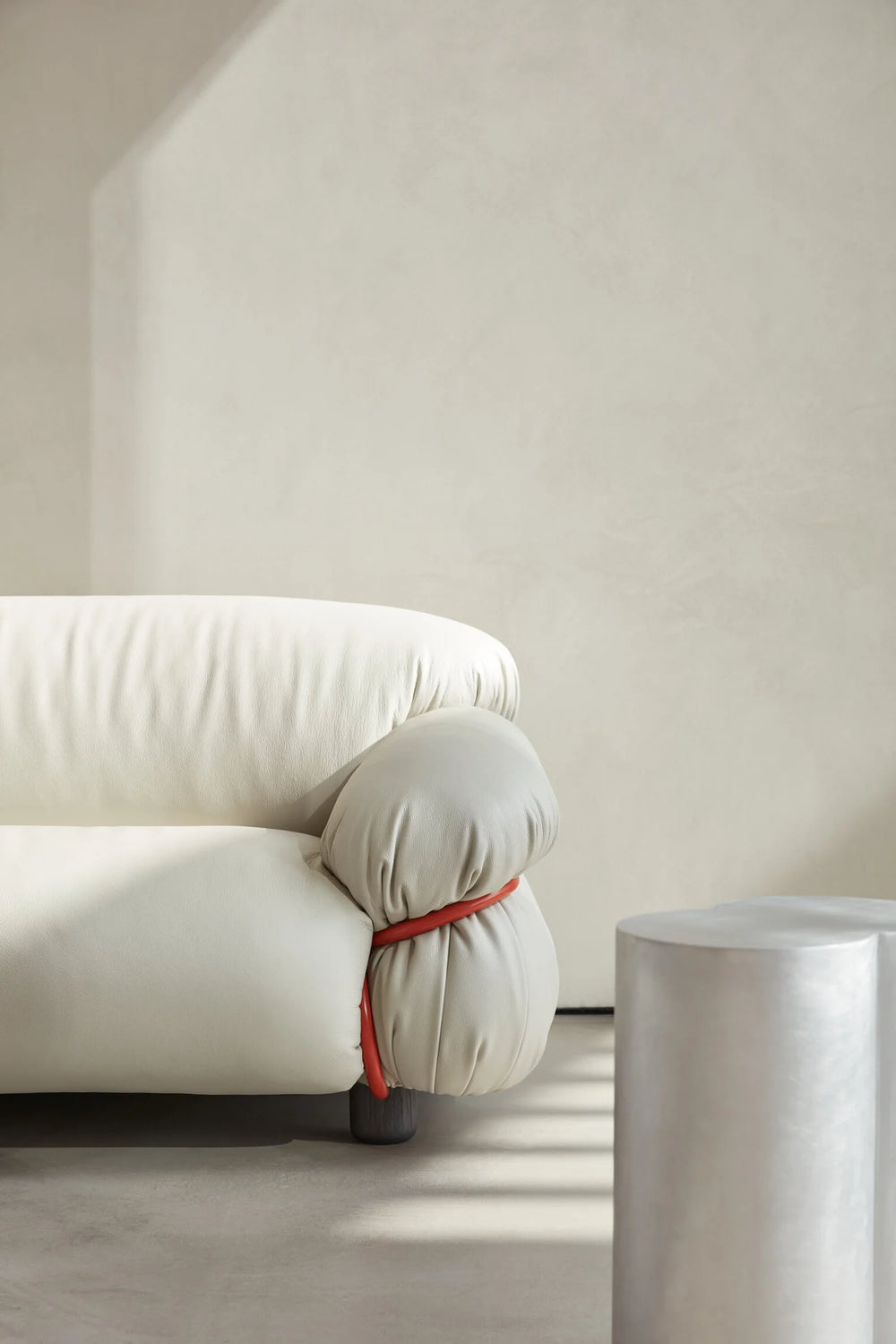
What makes the space compelling is the tension between heaviness and lightness. The substantial marble forms are balanced by delicate metal furnishings, while textured fabrics introduce warmth and softness. Every element appears carefully reduced to its essentials.


Set within the shell of a former steel mill, Mokki carries the memory of its previous life into the present. Rather than smoothing away the building’s industrial past, GGJH allows it to remain visible — in the height of the space, the raw structure, the traces of steel, brick and time.
The result is not nostalgia, but transformation. Old elements are treated as part of the architecture’s living character, while contemporary furniture and careful lighting bring a new sense of clarity to the interior. Nothing feels overly staged. The space works through contrast: heavy and light, raw and refined, past and present.


At first glance, stainless steel seems an unlikely choice for a neighbourhood café. Associated more often with industry than hospitality, it rarely evokes comfort or warmth. Yet at Simple Coffee in Montmartre, Mur Mur Architects use the material to create precisely that.
The compact interior is organised around a series of curved steel alcoves that introduce a sense of privacy and enclosure within the open space. Their rounded forms soften the material's inherent rigidity, creating intimate places to sit, pause and observe. Throughout the café, reflective surfaces, mirrored elements and carefully positioned lighting amplify the spatial experience without overwhelming it.
What makes the project memorable is its ability to transform an industrial language into something unexpectedly human. The steel never feels cold. Instead, it becomes sculptural, almost tactile, shaping a space that feels calm, precise and welcoming.


Located within one of Kaohsiung's busy commercial districts, Good Man Kohi Ryojin was conceived as a quiet counterpoint to the pace of the city outside. Rather than shutting itself off from its surroundings, the café uses large floor-to-ceiling windows to soften them, transforming the movement, signage and activity of the street into a constantly changing backdrop.
Inside, the space is organised around a series of gently curved wooden benches that encourage people to gather, linger and converse. At its centre, the coffee bar acts almost as a pavilion — a place of orientation and belonging around which the interior unfolds.


Hoof takes its cues from an unlikely source: the architecture of horse stables. Rather than translating this reference literally, Bone distilled the qualities that define these spaces — simplicity, functionality and an economy of means.
The interior is deliberately restrained. Stainless steel counters, lime-washed surfaces and clay-straw plaster walls create an environment that feels both raw and considered. Every element appears to serve a purpose, echoing the straightforward logic of equine architecture, where only what is necessary remains.
What gives the space its character is the careful balance between industrial and tactile materials. Steel introduces precision and durability, while textured plaster, wool fabrics and warm neutral tones soften the atmosphere. The result is minimalist without feeling cold.


Located on a corner overlooking Teutoburger Platz, Acid Café's Berlin outpost occupies a restrained architectural shell of concrete, steel and aluminium. Rather than reinventing the space, Studio Plantea chose to work with what was already there, introducing warmth through a series of carefully considered interventions.
At the centre of the café stands a large chestnut wood structure that wraps the staircase, houses shelving and anchors the sound system. Its presence softens the industrial character of the interior and establishes a calmer, more intimate atmosphere. Throughout the space, wood, textiles, ceramics and lighting create moments of tactility against the backdrop of exposed concrete and metal surfaces.
What makes Acid Café compelling is not any single object or material, but the balance between them. The project demonstrates how a minimalist interior can still feel welcoming, using texture, proportion and detail rather than decoration to create character.
The result is a café that feels distinctly Berlin—industrial, understated and thoughtful — a quiet refuge from the pace of the city outside.
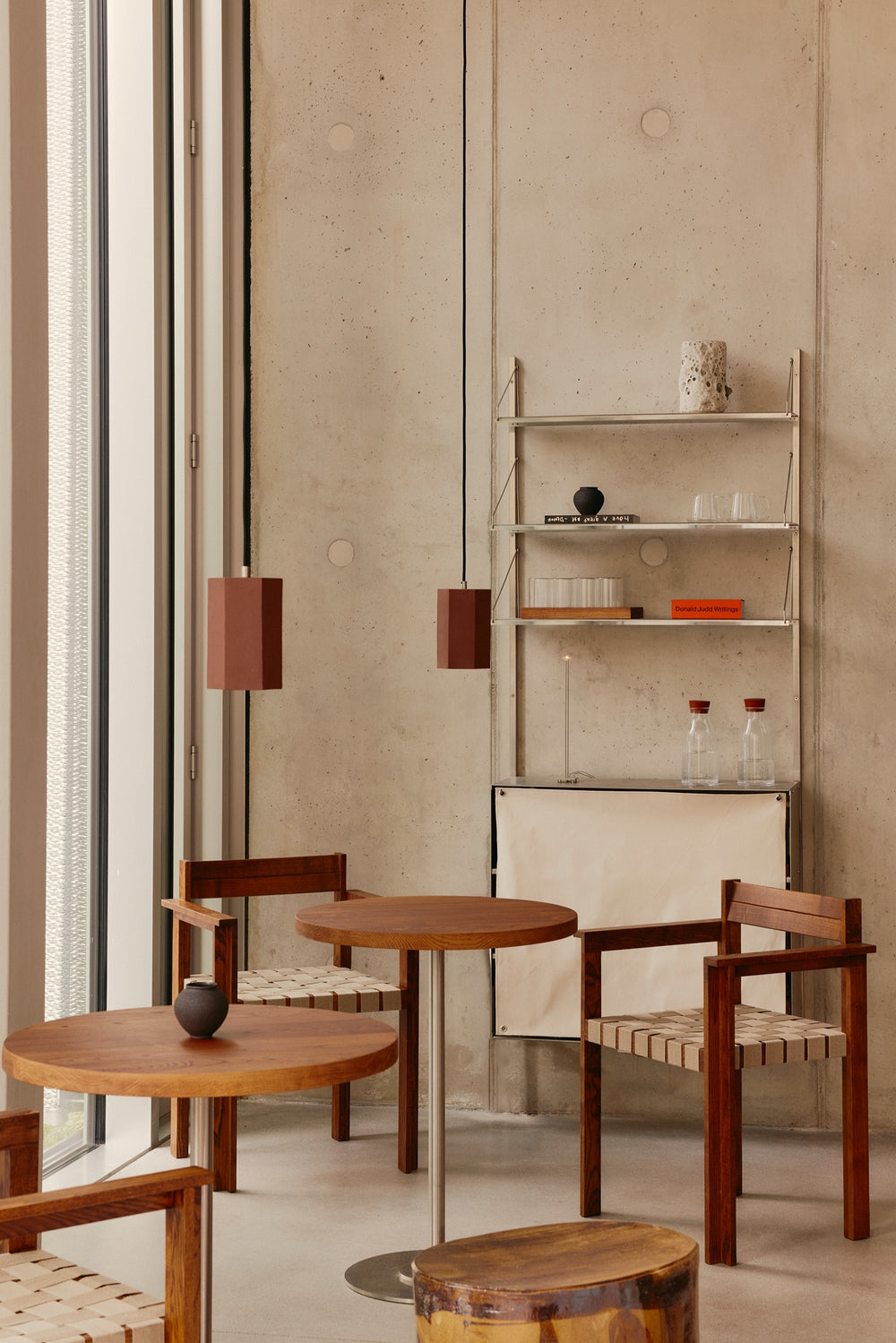
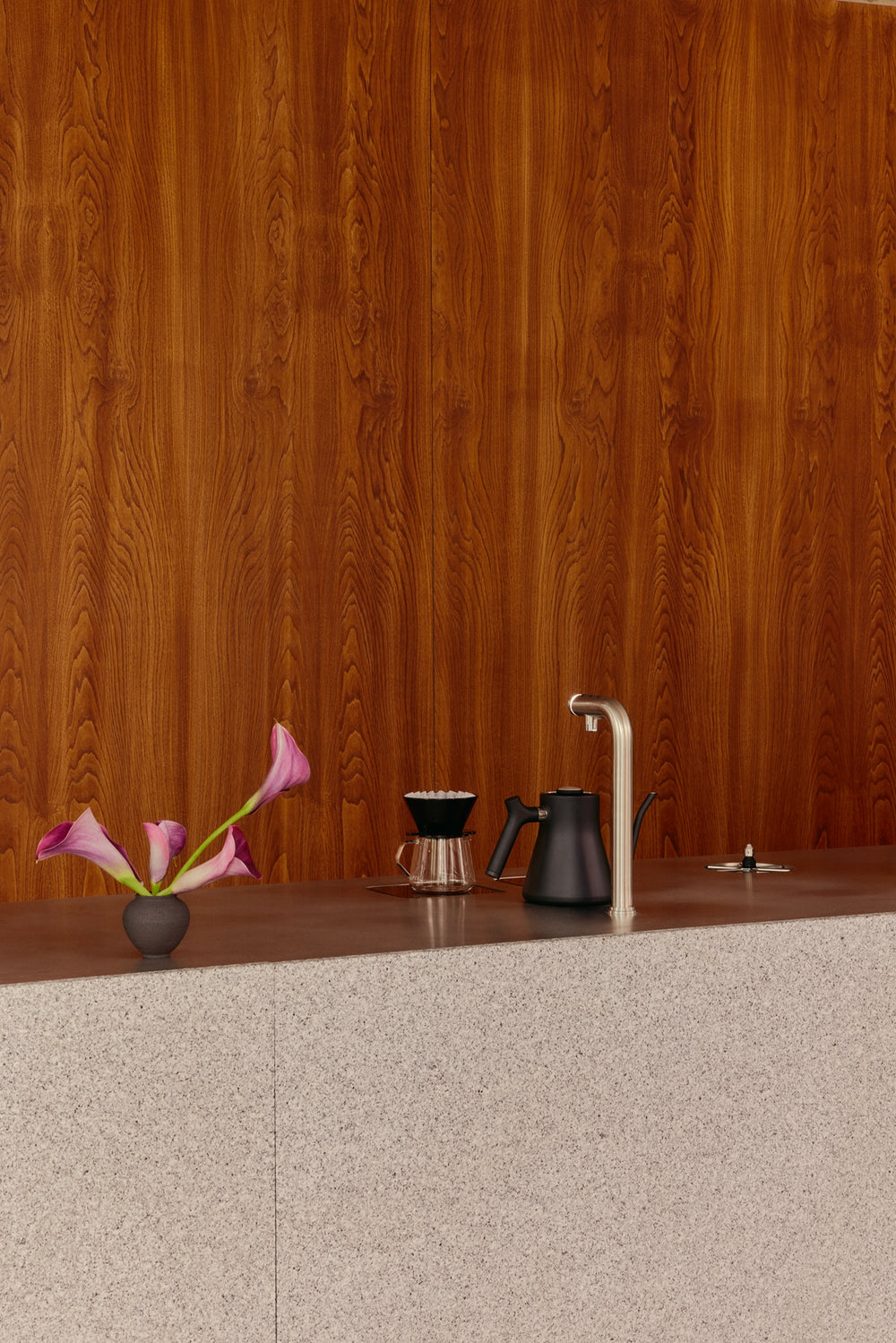
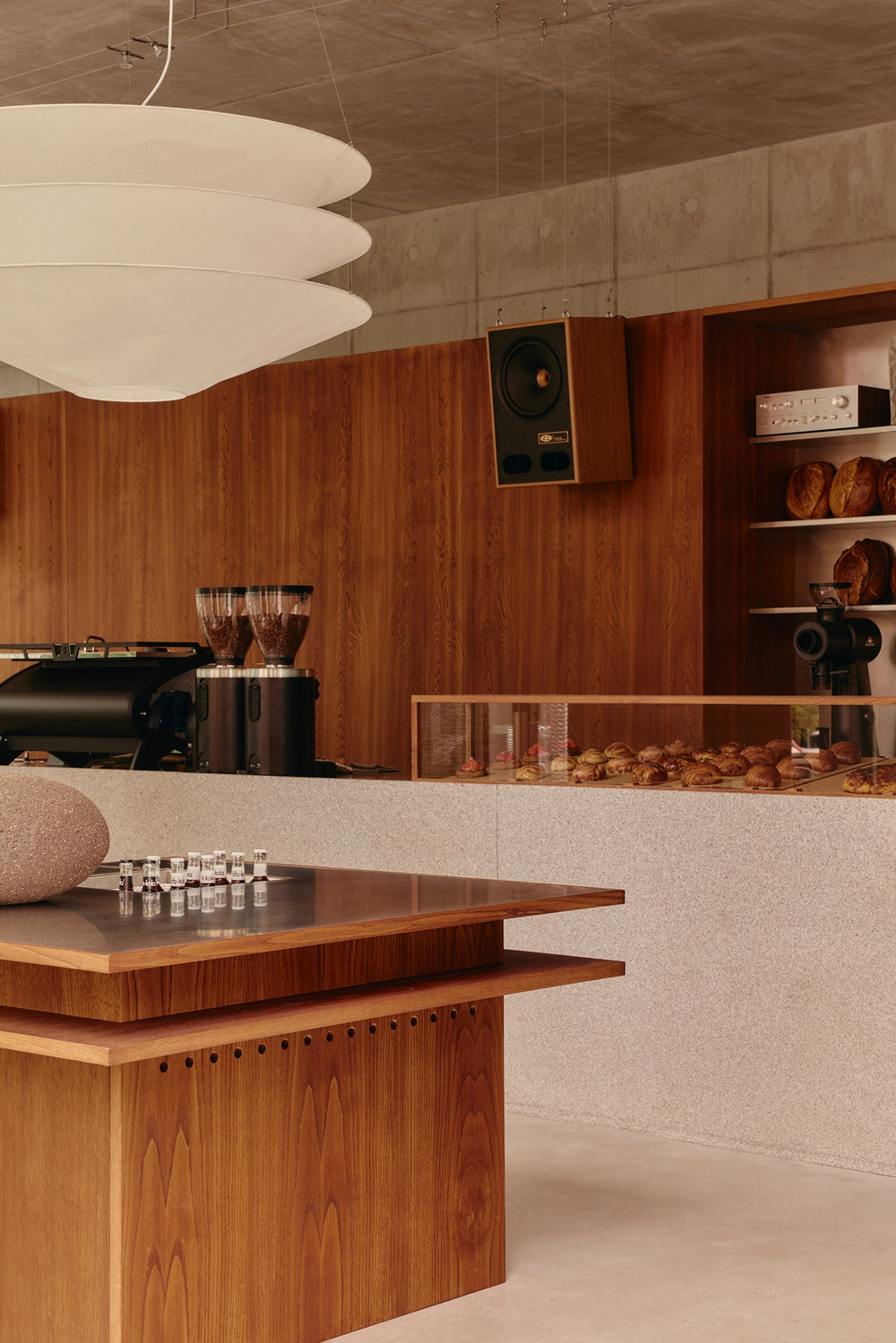


Wildkaffee Vienna demonstrates how restraint can create atmosphere. The interior is built around a carefully reduced palette of natural stone, clay and stainless steel, allowing materiality rather than decoration to define the space. The result feels calm, grounded and quietly confident.
At the centre of the café stands a sculptural stone counter, its monolithic presence anchoring the room while reflecting the brand's commitment to craftsmanship and transparency. Clay walls soften the precision of the stone and steel elements, introducing warmth and texture without unnecessary embellishment.
What makes the project memorable is its clarity. Every material serves a purpose, every detail feels considered. Rather than competing for attention, the different elements work together to create a sense of balance and permanence.