VASTO Gallery - Living with Art
Located in Barcelona, VASTO Gallery redefines the exhibition space by merging contemporary art with everyday living.
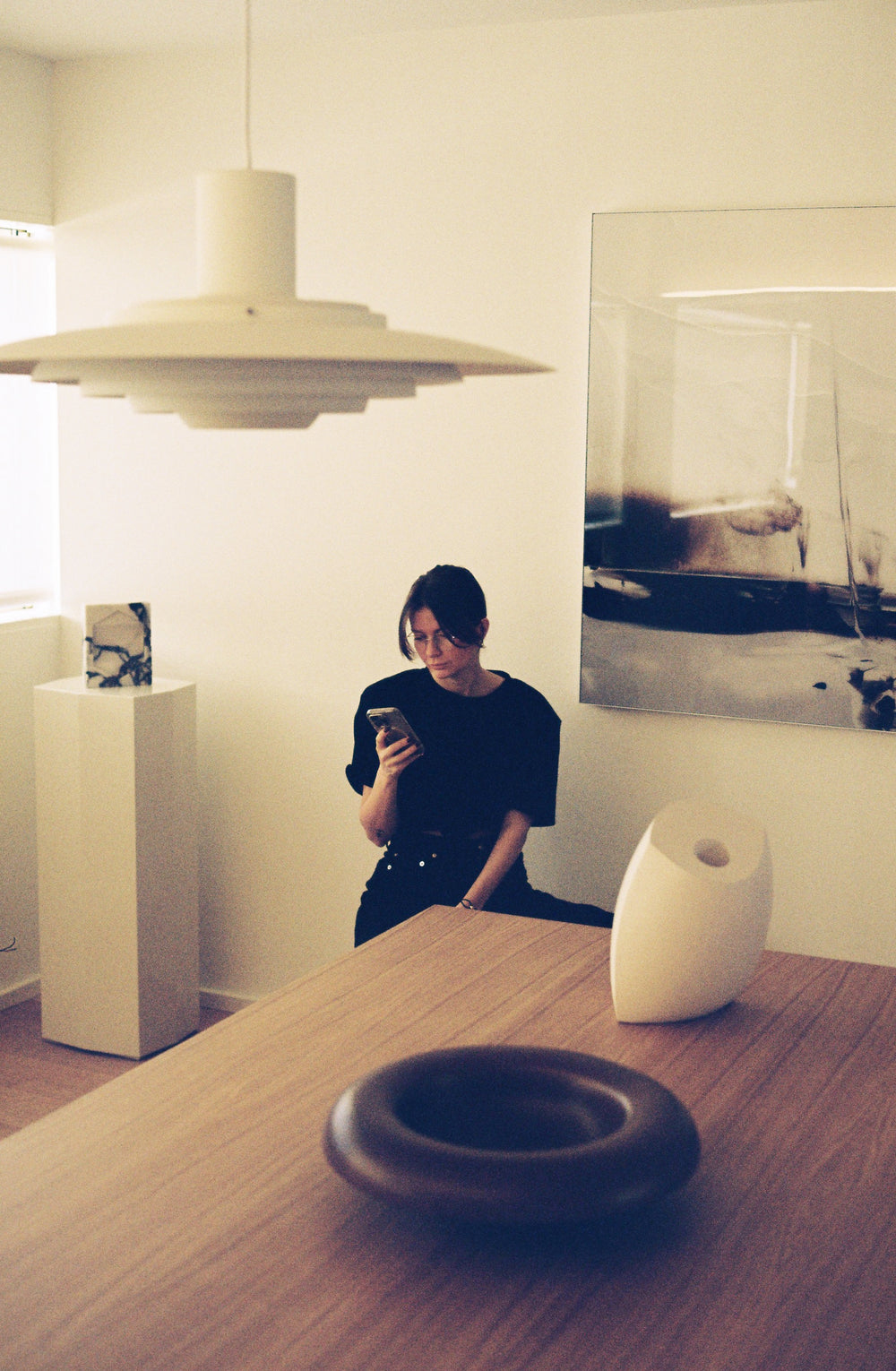
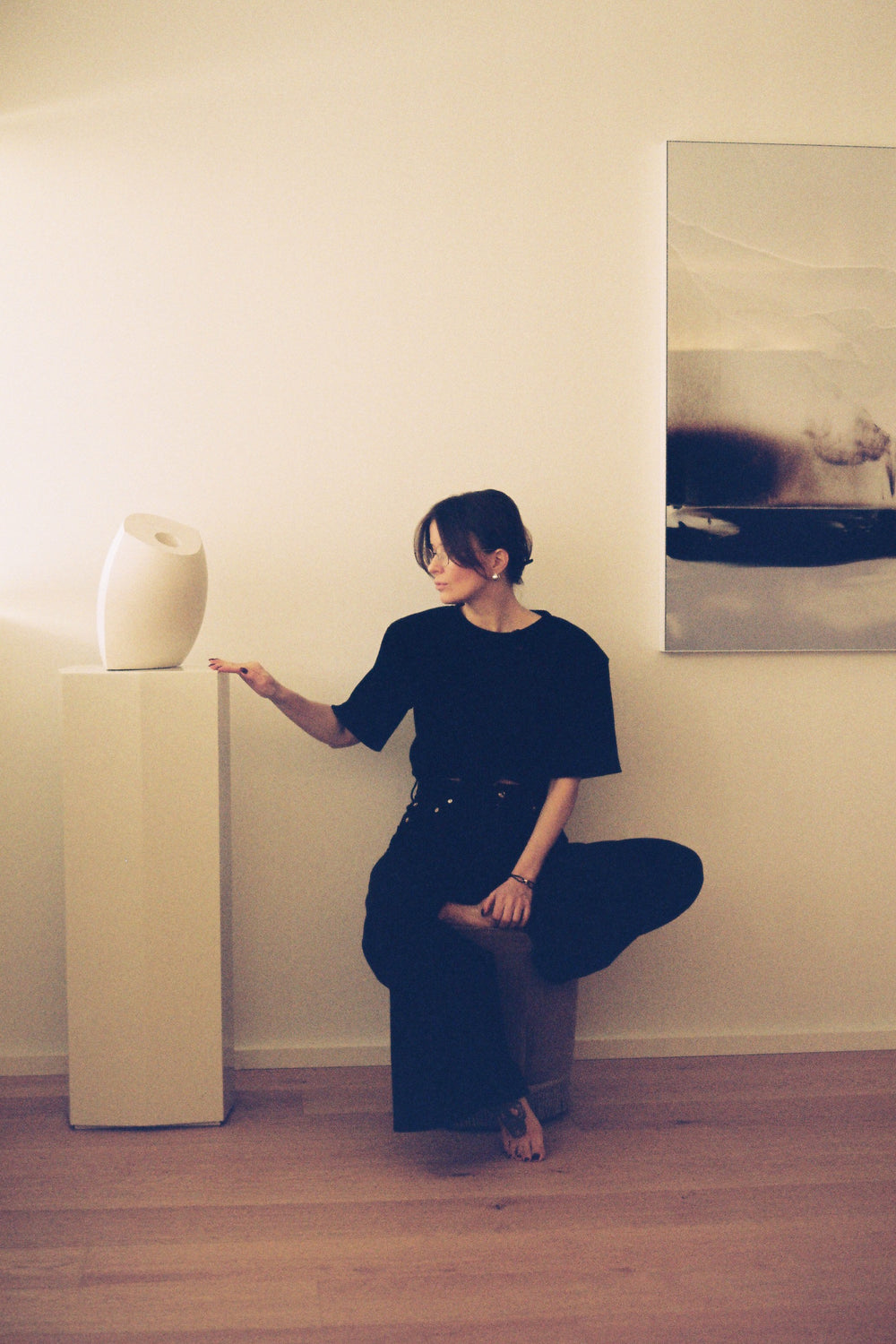
On a quiet, sun-filled afternoon in Lisbon, we visited Zoé Wolker in one of her latest interior projects. Moving effortlessly between architecture, interiors, photography, and collectible design, Zoé welcomed us into a space that felt much like her work itself—calm, thoughtful, and carefully composed.
Over coffee and conversation, she spoke about building a life in Lisbon, the influence of photography on her practice, and the journey from architectural sketches tucked away in a drawer to her first furniture collection. What followed was an honest reflection on balance: between function and emotion, brutalism and elegance, architecture and object.
What brought you to Lisbon? Does it feel like home now?
I moved here almost four years ago with a big desire to expand my boundaries. For me, this city and this country feel very balanced. There is a good energy here. I feel a certain equilibrium.
And what inspires you here?
I think the biggest inspiration is people. It's not really about the city itself or the physical environment. For me, it's about discovering a new cultural code. I'm inspired by the Portuguese attitude toward life because people put their values at the center. It taught me another way of living. After I moved here, I felt it was almost like a second life.
Do you think you've slowed down a bit?
Yes, in a way. I always thought I preferred big cities. Lisbon is obviously a city, but compared to others, it's not that big. (laughs) Here I found a balance between work and life. I finally have time to concentrate more on my creative process. I don't have those moments when I feel constantly overwhelmed. I don't need to search for quiet moments anymore. They simply come on their own pace.


Your background in photography seems to influence both your interiors and your furniture. How has that previous experience shaped your practice? I feel you have a very trained eye.
Photography, design, and architecture always developed in parallel. How did I develop my eye? (laughs) Well, my mother put me into an art-focused school when I was about five years old. From a very young age, I was learning about proportion, still life, composition, and balance. I started to understand how shapes communicate with one another and how different forms relate to each other. I think art school gave me that foundation.
I started taking photographs when I was around fifteen, when I got my first camera. Photography developed alongside my architectural studies and later my professional work. Sometimes I felt like I was cheating because I was constantly moving between disciplines. I wanted to pursue both directions, but at the same time I felt that if I wanted to achieve something, I should focus on one path. Everybody tells you that. In the end, I kept photography very close to my heart, but I chose design as the center of my practice.
For me, photography was always about the connection between people and space. In many ways, that's exactly what I'm doing through design.

How did your first furniture collection come about? What sparked the desire to create it?
Definitely my architectural background. During university, we spent years drawing plaster sculptures. It was an exercise designed to teach us how to observe light, surfaces, and geometry. These sculptures were made of many planes and edges, and the goal was to understand how shapes change depending on light and perspective. This simple approach became the starting point for my first collection.
I became fascinated by how light transforms a shape. If you look at one of my pedestals, for example, it's a very simple and strong object, but it plays gently with its surroundings through reflections, shadows, and subtle changes throughout the day. I was also interested in how different finishes completely change the perception of the same form. Brushed steel behaves very differently from an oyster-colored lacquer finish, even when the shape remains identical.
What was the process of actually bringing those ideas into reality?
The truth is that those sketches sat in a drawer for quite a long time. (laughs) Almost two years. There was always something else happening. After moving here, I got distracted by life. The ideas were there, but I never found the right moment. Then, after I had settled in Lisbon, I travelled to New York and met someone who unexpectedly pushed me forward. During a conversation, that person simply asked me: "Could you produce this piece? Can I see your design in real life?" And I immediately replied: "Yes. In two months you'll be able to see it." (laughs) It's funny because that conversation happened at exactly the right moment. I think I was finally ready. I came back home and immediately put everything into production.
Your collection feels very thoughtful, precise, and controlled. Is there space for experimentation in your process?
Absolutely. For me, it's important to find a balance between two completely different directions. In architecture, I love brutalism. I love strong shapes, clear geometries, and that powerful, almost masculine energy. But at the same time, I'm a huge admirer of Art Deco, its elegance, details, and refinement. I always try to merge these two worlds into one coherent voice, whether through materials, proportions, or form.
How do you see your work within today's world of collectible design?
I see that shift, and I think it's beautiful and liberating. But for me, it's always about balance. I come from architecture, where function is fundamental. Of course, I want objects to evoke emotions and create atmosphere, but I still approach design from a practical perspective.
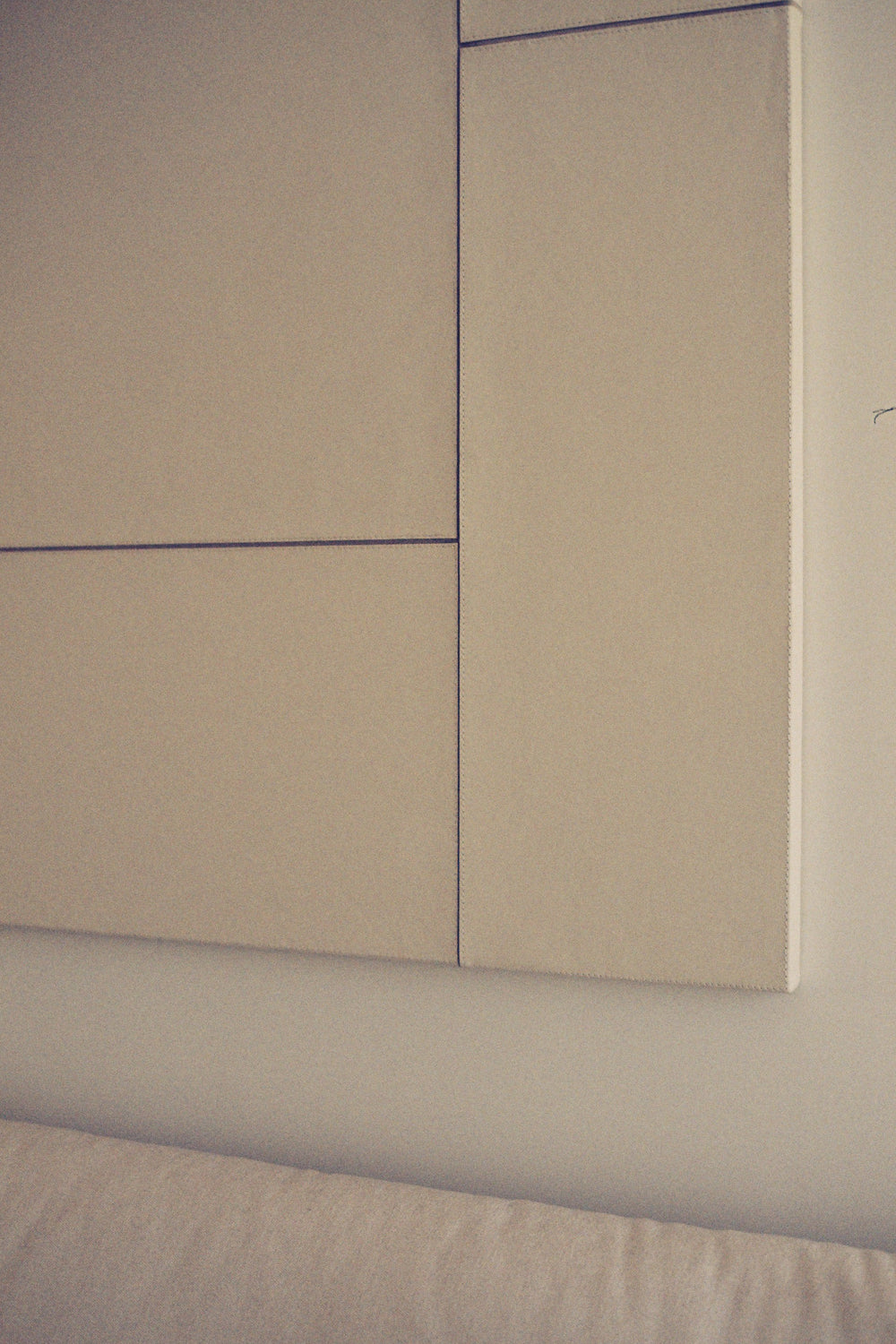
What interests me most is the space in between. For example, I recently designed a screen that can be seen as an art object, but it also belongs to architecture. It divides space, transforms it, and changes the way other objects relate to one another. That's where things become interesting for me—when an object exists somewhere between architecture, design, and sculpture. There is definitely more to explore there.


Is there room for something more organic? I imagine you as a very organized designer.
Maybe it will change one day. (smiles)
Organic and wilder forms often feel imperfect to me. I'm surrounded by imperfections all the time, and maybe that's why I don't feel the need to introduce more organic shapes into my work. I often strive to create contrast with my surroundings. If everything around me is organic and imperfect, I naturally find myself drawn toward something more controlled and structured.